
A Week at the Frontiers of Complex Systems
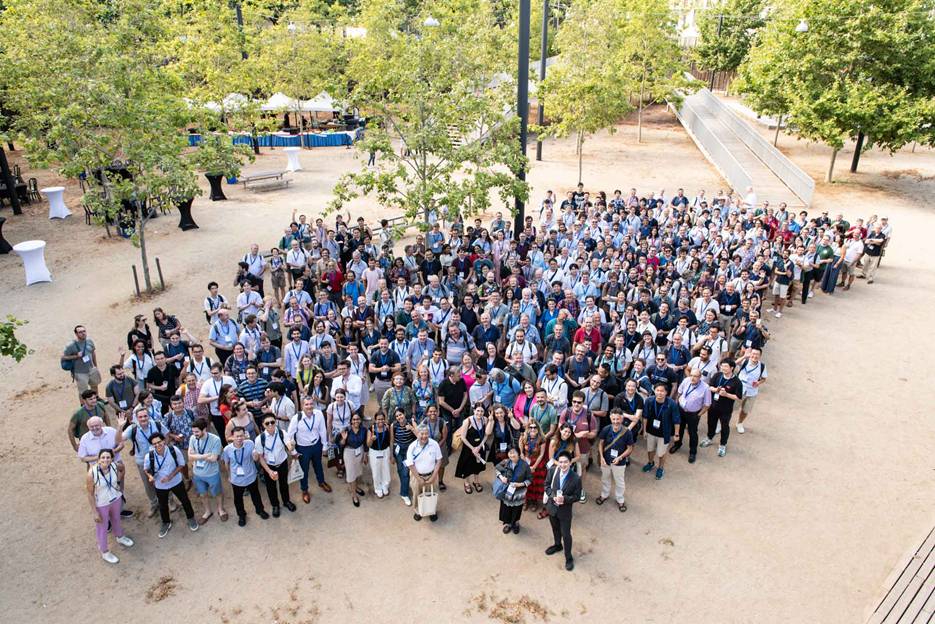
This July, I had the privilege of attending the 10th International Discussion Meeting on Relaxations in Complex Systems (10thIDMRCS), held July 20–25, 2025 at the Campus Diagonal-Besòs of the Universitat Politècnica de Catalunya–BarcelonaTech.
The conference marked the 10th anniversary of this international series, which has become a premier forum for researchers exploring relaxations, dynamics, and vibrational anomalies in complex and disordered systems. With its dynamic mix of oral presentations, poster sessions, and informal discussions, the event once again proved to be a hub for advancing both scientific understanding and international collaboration.
My Contributions
I was honored to contribute to the meeting in two ways:
- Delivering my own oral report
- Serving as coauthor on five oral presentations
My Oral Report: Rethinking the Boson Peak
My presentation, titled:
“Absence of a Boson Peak in Low-Temperature Heat Capacity of Some Layered Materials”
(A.I. Krivchikov & A. Jeżowski)

In many glasses and amorphous materials, the low-temperature heat capacity exhibits an excess contribution compared to the Debye model prediction—known as the boson peak. This anomaly, seen in C/T³ vs. T plots, reflects additional low-energy vibrational modes linked to disorder.
Yet, in certain layered materials—such as carbon polymorphs or molecular systems with 2D stacking—the boson peak is absent. Our calorimetric studies revealed:
- A well-ordered phonon spectrum, without excess low-frequency modes.
- Strong in-plane bonding combined with weak interlayer forces, leading to anisotropic phonon dispersion.
- A negative C₅T⁵ contribution at low temperatures, suggesting flexural phonon dominance.
This challenges conventional assumptions about phonon anomalies in reduced-dimensional systems and provides new insights into vibrational behavior in layered solids. Beyond fundamental physics, these findings may guide the design of novel pharmaceutical materials by predicting thermal and vibrational properties.
Coauthored Contributions
In addition to my own talk, I coauthored five oral presentations covering a wide spectrum of glassy and vibrational phenomena:
- M.A. Ramos, D. Szewczyk, A.I. Krivchikov & J.L. Tamarit
The boson peak and two-level systems in glasses and disordered crystals: a tale of two cities. - J.F. Gebbia, D. Szewczyk, C. Escorihuela-Sayalero, T. Guidi, A. Jeżowski, A. Krivchikov, C. Cazorla, M.A. Ramos, J.L. Tamarit
Glassy anomalies in molecular crystals with minimum disorder: the case of para-chloronitrobenzene. - D. Szewczyk, A. Jeżowski, A.I. Krivchikov, J.L. Tamarit & M.A. Ramos
Boson peak and glassy behavior in benzene derivatives: heat capacity of quasiplanar molecular crystals. - V. Tkáč, P. Baloh, A.I. Krivchikov, D. Szewchyk, R. Tarasenko, V. Stadnyk, S. Vorobiov, M. Orendáč, A. Orendáčová, J. Holubová, E. Černošková, Z. Černošek, A. Feher & E. Čižmár
Ultralow lattice thermal conductivity in polymer-like binary ZnO–P₂O₅ glasses.
Together, these works highlighted the remarkable diversity of glassy anomalies—from two-level systems to ultralow thermal transport—demonstrating how even subtle disorder can profoundly affect physical properties.
Building Visibility and Collaborations

One of the most valuable aspects of presenting at 10thIDMRCS was the opportunity to increase visibility within the international community. My oral report generated lively discussions and constructive feedback, allowing me to refine future research directions.
Equally important, the conference enabled me to connect with a range of colleagues whose expertise complements my own. New contacts include Hideyuki Mizuno, Anne Tanguy, Giacomo Baldi, Jonathan Fernando, Kia Ngai, Jonathan F. Gebbia, Michele Simoncelli, Taras Bryc, Erica Alfinelli, Alessio Zaccone, Osamu Yamamuro, Daria Szewczyk, and Vladimir Tkáč.
These discussions laid the foundation for potential collaborations, spanning both experimental calorimetry and theoretical modeling of vibrational spectra.
Looking Ahead
Attending the 10thIDMRCS was both a professional milestone and an intellectual adventure. Presenting my own findings, coauthoring multiple contributions, and exchanging ideas with leading scientists have deepened my understanding of vibrational anomalies and opened new pathways for collaborative research.
The absence of the boson peak in layered materials is just one piece of the puzzle—but it points toward exciting new directions at the intersection of dimensionality, disorder, and thermal physics.
I look forward to continuing this exploration, building on the insights gained in Barcelona, and contributing to the vibrant community that the IDMRCS has nurtured over the past decade. 👉 For more information about the meeting and upcoming editions, visit the official website: 10idmrcs.com.